Reviewed by Lee Gundenswager, Lead Electrician, Lic #92217 Last reviewed
Why an EV charger can need a switchboard upgrade
An EV charger is one of the biggest continuous loads in a home: up to 32A for hours at a time. It needs its own circuit with a correctly rated breaker and RCD (safety switch) protection, installed in a board that can safely take it. Many older Brisbane boards were never designed for that, and some have no room at all for another device.
Signs your board needs work
| What you see | What it usually means |
|---|---|
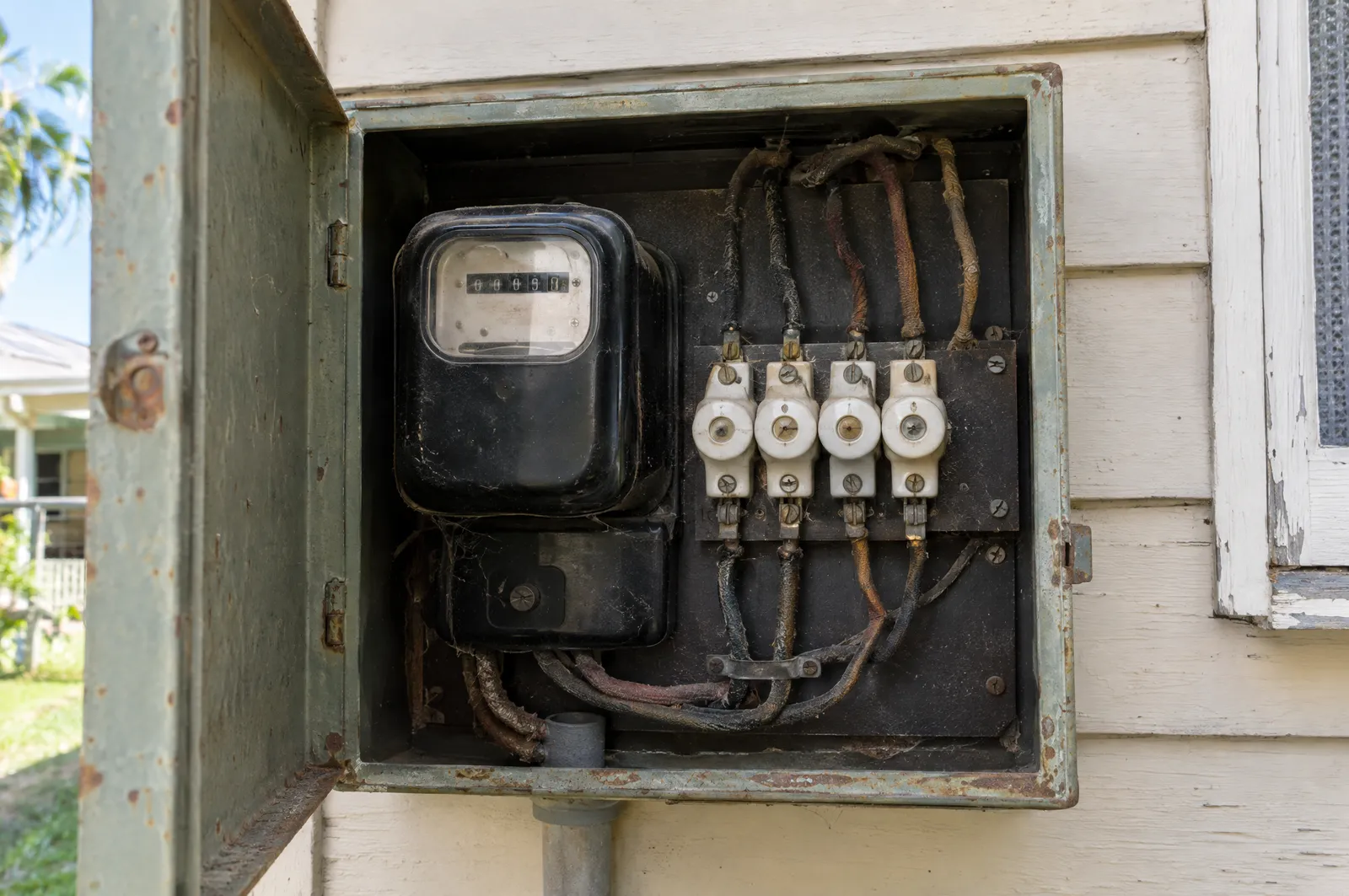
| White ceramic fuses that pull out | An old rewireable-fuse board: an upgrade is needed |
| No devices with a "T" test button | No safety switches: an upgrade is strongly advised |
| Every slot already filled | No room for the new circuit: an extension or new board |
| Black or brittle backing board | An old board that may contain hazardous materials: replace it |
| Modern breakers, a safety switch and a spare slot | Probably fine for a charger as is |
What a switchboard upgrade involves
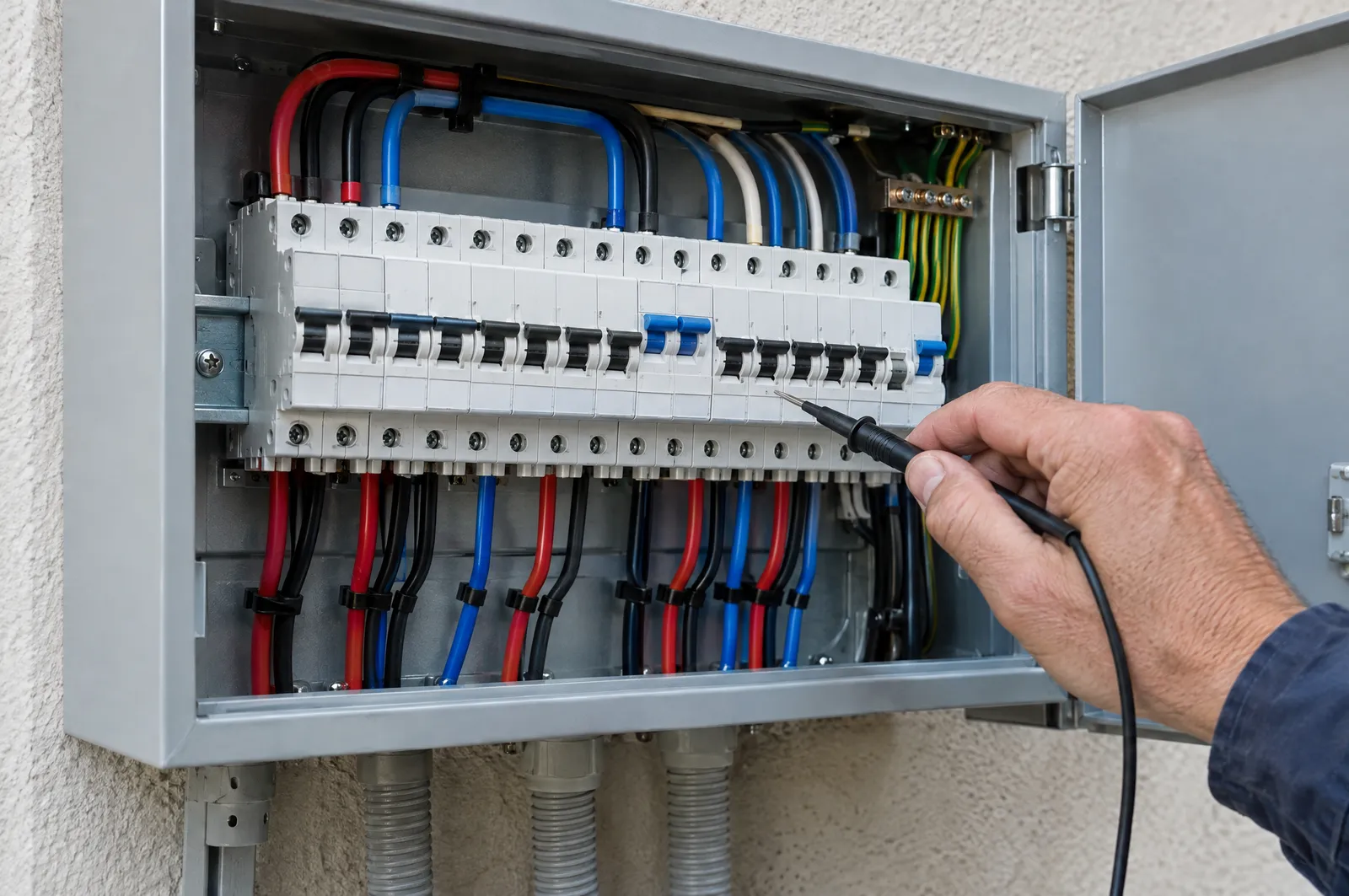
- Replacing the old board with a new enclosure and DIN-rail devices
- Safety switch (RCD or RCBO) protection on circuits as required by current standards
- A properly rated circuit for the EV charger, plus space for future additions such as solar or a battery
- Testing every circuit, and a Certificate of Testing and Compliance
What does it cost?
It depends on the board's size, its condition and whether anything else needs fixing along the way. Third-party industry guides quote roughly $800 to $3,000 for a residential switchboard upgrade in Brisbane. We give you a fixed price for the upgrade, separate from the charger install, so you can see exactly what you are paying for. See the EV charger cost guide for the full picture.
Which homes are most likely to need one?
Queenslanders, post-war houses and many 1960s to 1980s homes that have never had a full electrical upgrade are the usual candidates. Most homes built since the 2000s, including the newer estates across the northside and Moreton Bay, have modern boards with safety switches and only need a spare slot.
Avoiding a supply upgrade
If your home's total supply is the limit rather than the board, a charger with load management can usually solve it. It slows charging when the house is drawing a lot and speeds up again when demand falls, which is far cheaper than upgrading the supply.
Switchboard upgrade FAQs
How do I know if my switchboard needs upgrading?
Look inside the meter box. White ceramic fuses you can pull out, no test buttons on any device, a wooden or asbestos-style backing board, or every slot already full are all signs. A board with modern breakers and at least one safety switch usually just needs space for the new circuit. Photos let us tell you for sure.
Can the upgrade and charger install happen on the same day?
Usually, yes. A typical home switchboard upgrade plus a charger install fits in one longer day. The power is off for part of it, so plan for that. Bigger jobs, such as moving a board or a supply upgrade with Energex, take longer and we will tell you upfront.
Is a switchboard upgrade the same as a supply upgrade?
No. A switchboard upgrade replaces the board inside your meter box. A supply upgrade increases the power your home can draw from the network, or changes it from single to three phase, and involves Energex. Most EV installs need neither; some need a board upgrade; very few need a supply upgrade, especially if the charger has load management.
Will my switchboard cope with an EV charger?
Usually yes, but older boards are the most common reason a quote goes up. A charger needs its own circuit with RCD protection and enough spare capacity in your supply. Boards with ceramic fuses, no room for new devices or no safety switches generally need an upgrade first. We check the board on the site visit or from photos and tell you before you commit.
Can you install a charger in an older Queenslander?
Yes. Older homes just need a closer look at the wiring and switchboard first. Many still have original or partly upgraded boards that lack room or safety switches for a new circuit. The good news is that the space under a high-set Queenslander often makes the cable run easy. We inspect first and quote any switchboard work separately so you can see it.
What is load management on an EV charger?
Load management lets the charger slow down when the rest of the property is drawing a lot of power, then speed up again when demand drops. It protects your main supply from overloading, so you can often avoid a costly supply upgrade. It is standard practice in apartments and businesses and useful in homes with big loads like ducted air conditioning.