
Reviewed by Lee Gundenswager, Lead Electrician, Lic #92217 Last reviewed
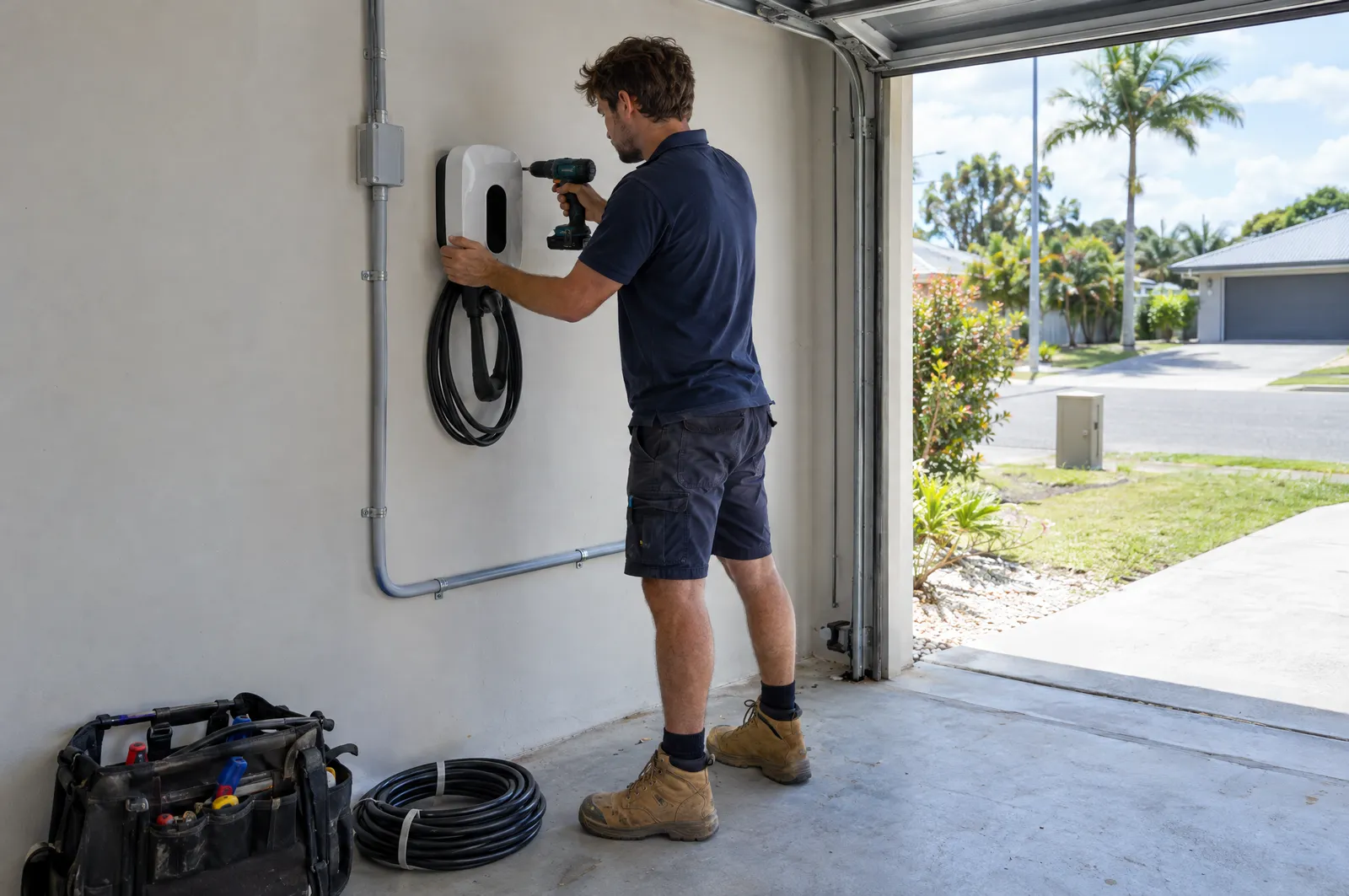
What you get with a Tesla Wall Connector install
- A dedicated 32A circuit with the correct breaker and RCD protection
- Wall or pedestal mounting where the cable reaches your charge port comfortably
- Commissioning: current limit set to suit your circuit, Wi-Fi connection and firmware update
- A test charge with your car and a Certificate of Testing and Compliance
Tesla Wall Connector at a glance
| Connector | Type 2, the Australian standard, so it also charges non-Tesla EVs |
|---|---|
| Single-phase output | Up to about 7.4kW at 32A |
| Three-phase | Supported; faster AC charging if your car accepts it |
| Power sharing | Multiple Wall Connectors can share one circuit |
| Solar-surplus charging | Not on its own; consider a Zappi or Wattpilot if this matters most |
Specification per Tesla's Australian support pages, checked October 2026.
Wall Connector or a different charger?
If you drive a Tesla and want a tidy, reliable charger that just works with your car and app, the Wall Connector is an easy choice. If you have rooftop solar and want the car to soak up your midday export automatically, a solar-aware charger is usually a better fit, and it charges a Tesla just as well. Compare options on our charger brands page and solar EV charging page.
Single phase vs three phase for a Tesla
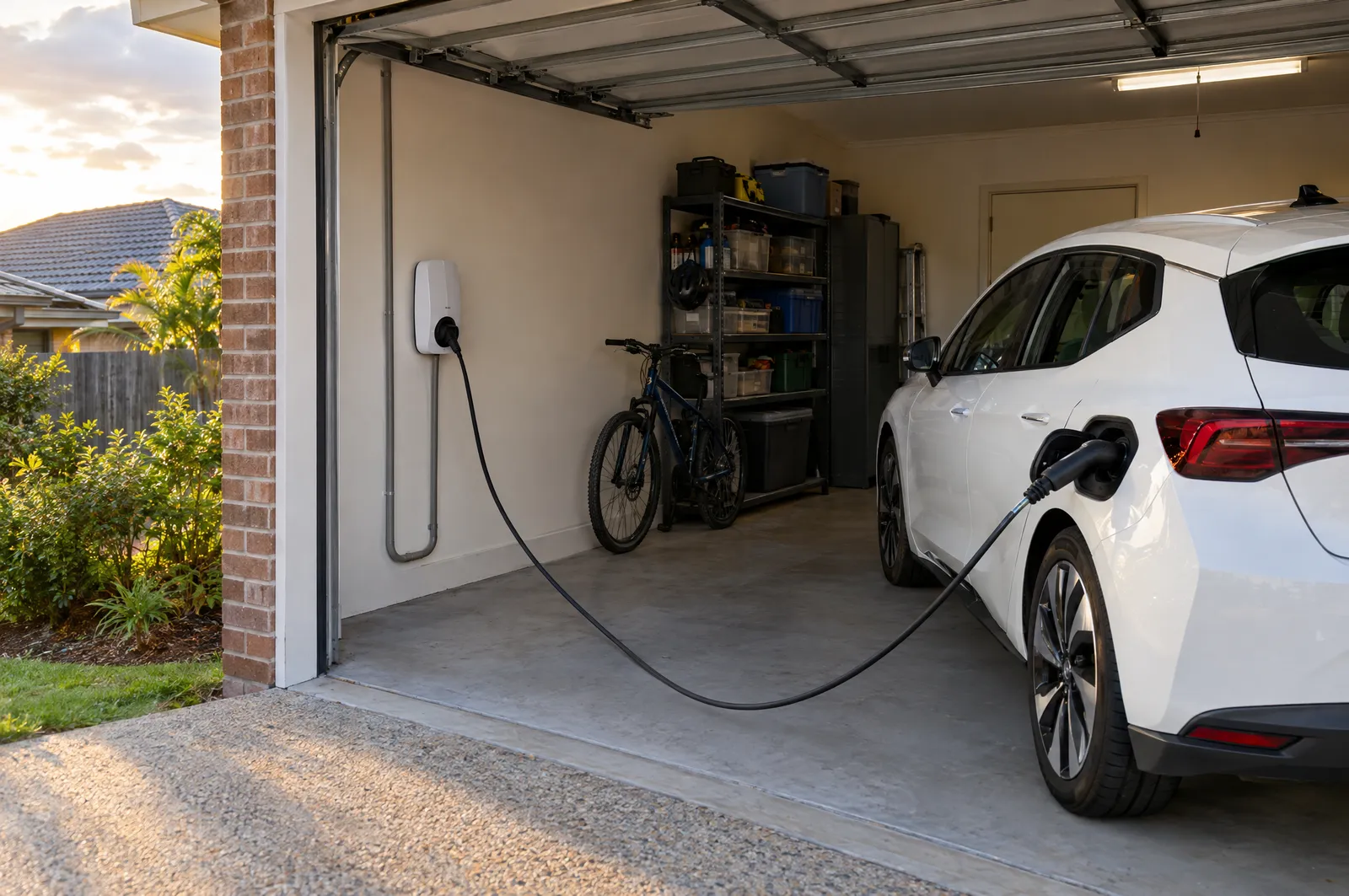
Most Brisbane homes have single-phase power. A single-phase 32A charger delivers up to about 7.4kW, which adds roughly 40 to 50 km of range per hour. A 22kW charger needs three-phase power and a car that can accept 22kW AC; many EVs are limited to 7kW or 11kW on AC. Most Brisbane Tesla owners charge happily on single phase overnight.
Installation cost
Installation of a Wall Connector you already own is from $990 installed (inc GST) for a standard single-phase job. Long cable runs, switchboard upgrades and three-phase installs are quoted separately. See the full cost guide for what affects the price.
Tesla Wall Connector FAQs
How fast does a Tesla Wall Connector charge on single phase?
Up to about 7.4kW on a single-phase 32A circuit, according to Tesla, which adds roughly 40 to 50 km of range per hour of charging. That refills a typical day of driving in a couple of hours overnight. On three-phase supply it can deliver more, provided the car supports faster AC charging.
Do I need to buy the Wall Connector from Tesla?
You can buy it from Tesla or an authorised reseller and we will install it, or we can quote supply and installation together. Either way, send us the model so we can confirm the circuit and settings before the day.
Can the Wall Connector be set to a lower current?
Yes. During commissioning the electrician sets the maximum current to suit your circuit and supply. If your home has a busy supply, we can set a lower limit or add load management so the charger never overloads your main circuit.
Can a Tesla Wall Connector charge other EVs?
Yes. The current Tesla Wall Connector uses the standard Type 2 plug used in Australia, so it can charge non-Tesla EVs as well. It delivers up to about 7.4kW on single phase. It does not follow your solar surplus on its own (Tesla's solar charging features rely on other Tesla hardware), so solar owners who want that often choose a Zappi or Wattpilot instead.
Can I charge my EV from my solar panels?
Yes. With a solar-aware charger such as a myenergi Zappi or Fronius Wattpilot, the charger watches your export and tops up the car with surplus solar instead of sending it to the grid. It needs a current sensor at your meter or inverter integration. Charging fully on solar works best if the car is home during the day.
Can I charge two EVs at home?
Yes. You can fit two chargers that share the available power, or one charger and plan charging times. Many chargers support load sharing, so both cars charge overnight without overloading your supply. If you expect a second EV soon, mention it at quoting so we size the circuit and cable for it now and save a second callout later.